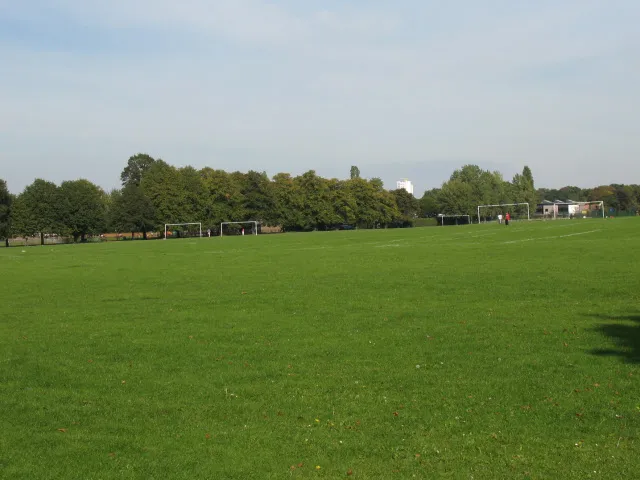
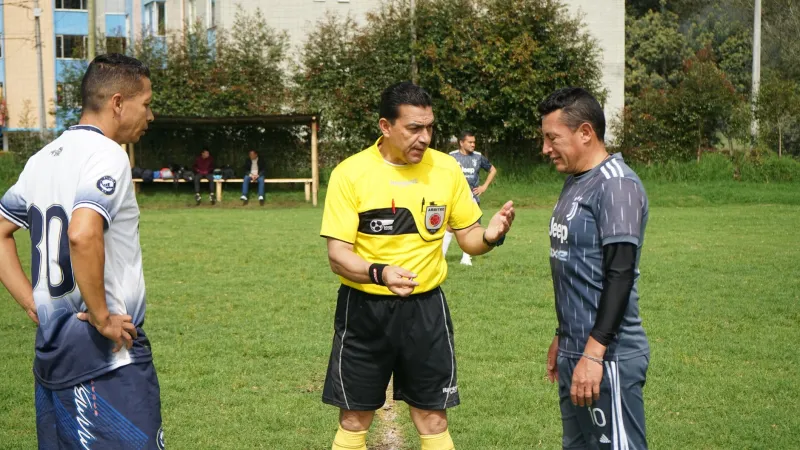
The Counter Before the Whistle: Strong Tea, Cracked Lino and Sunday League's 7:15 Rush
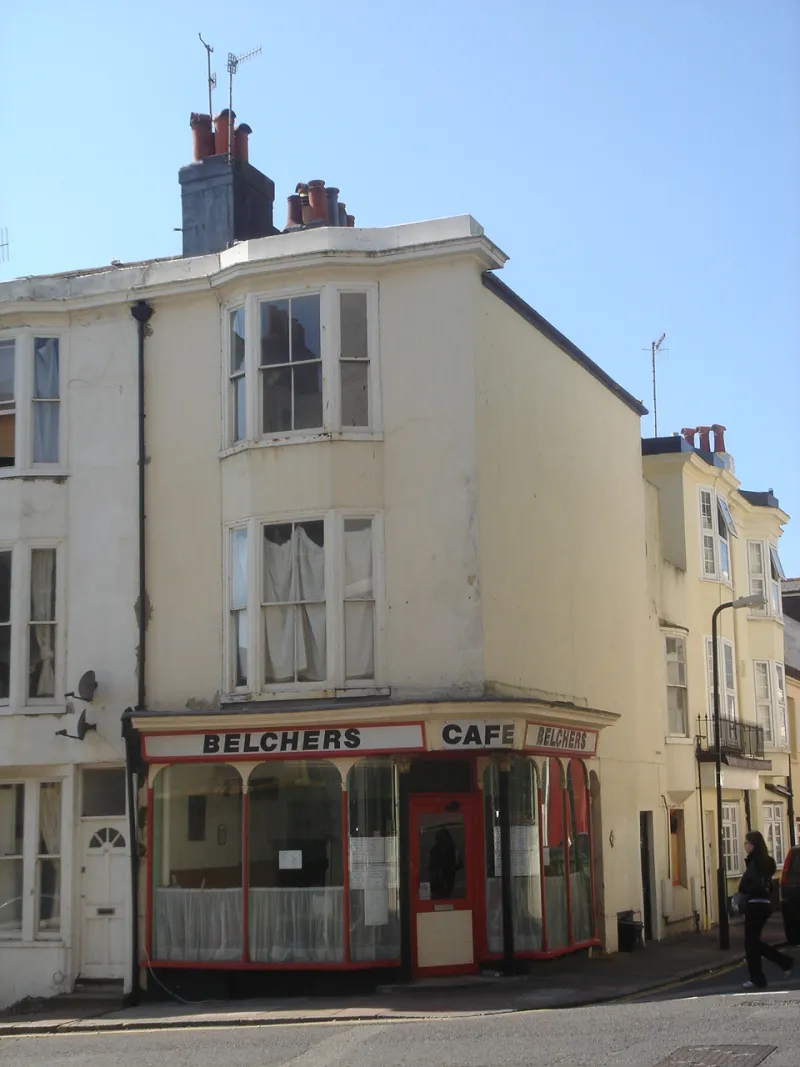
Photo: Hassocks5489, CC0, via Wikimedia Commons
At 8:03 on a Sunday, the café two streets from the council pitch is already halfway through its first rush. The griddle is hissing. The tea urn is doing that low, patient rumble. Someone has written the day's kick-off times on the back of a delivery note and stuck it to the till with a bit of Blu Tack. A referee in black tracksuit bottoms is trying to pay for a pot of tea with a tenner while a bloke in a goalkeeper top holds the door open with his boot.
By 8:15, the queue is out of the door and the air smells of bacon, brown sauce and wet astroturf. This is not a trend story. It is just Sunday morning in a lot of British towns, and the café near the pitch is where the day actually starts.
Before the Whistle, the Kettle
The café does not open early because it is charming. It opens early because the fixture list says so. Under-11s at 9am, reserves at 10:30, the Sunday veterans at midday if the pitch survives the week. The owner knows the pattern better than most club secretaries. She knows that a 9am kick-off means bacon rolls from 7:15, that the refs want tea before anything else, and that the parents will arrive in two waves: one for coffee and one for orange juice and a bit of toast.
The decor is not the point. Cracked lino, a radiator that clanks, a menu board with a missing letter, and a stack of newspapers nobody has time to read. What matters is the speed. Mugs are filled before the order is finished. Rolls are buttered with a kind of muscle memory. The woman on the till can spot a hangover, a nervous centre-half and a bloke who has forgotten the team sheet all in the same glance.
The Order Board Is a Team Sheet
Sunday league orders are weirdly consistent. The referee usually goes black coffee or tea, no sugar, and a slice of toast he will not finish. The goalkeeper wants a bacon roll with no sauce, then changes his mind when someone else gets sauce. The parents order lattes they will carry to the touchline and abandon on a wall. The bloke carrying the milk crate of bibs gets six teas and does not write any of it down, which is either confidence or a cry for help.
Then there are the rituals. The team sheet gets spread out on the table by the window and checked against the WhatsApp group. The fines pot gets counted in coins. Someone asks for a fork to fish a ring out of the sink. Someone else asks whether the pitch is definitely on, and the whole café turns, briefly, like a weather vane. The café does not just feed the game. It hosts the last ten minutes before it, when everyone is still pretending they are not nervous.
The counter also acts as a lost property desk. Shin pads, a phone charger, one glove, a car key. The staff keep it all in a cardboard box under the till. If you have ever wondered where Sunday league's memory goes, it is probably in a box next to the paper napkins.
The 2026 Maths of Opening at Seven
Early-hours trade is a tough business in 2026. Energy costs, bacon prices, bread, butter, card fees, staff wages. A café cannot survive on sentiment. It survives on volume, and Sunday league delivers volume in a very narrow window. From 7:15 to 9:45, the till can take more than it does on a quiet Tuesday afternoon. That is the maths. The club scarves and the muddy boots are not decoration. They are the reason the shutters go up.
It is why some cafés near playing fields have got sharper about it. They open earlier, they do takeaway bacon rolls, they keep a flask of tea ready. They know the 9am manager is not going to wait twelve minutes for a flat white. They know the under-12s parents need speed and a bin for the juice carton. None of that is glamorous. It is just a local business reading its own street.
When the Fixtures Go Quiet
And then there is the other Sunday. The frost came in, the council pitch failed a morning inspection, the 3G is booked for a cup tie three miles away. The café still opens. It just feels wrong. The 8:03 bacon roll is still there, but the queue is thinner. The referee is not in the corner. The milk crate of bibs is absent. The staff keep looking at the door, waiting for the rush that is not coming.
Postponements hit the counter harder than people think. No games means no parents, no refs, no players, no bloke buying six teas. The regulars still come, because a café is a café, but the Sunday rhythm goes flat. The owner shrugs and says the fixture list is the real rota. When it goes quiet, the whole place notices.
That is why the café and the council pitch feel like part of the same machine. One runs on bookings and inspections, the other on bacon and tea. When the pitch says yes, the counter says yes. When the pitch says no, the counter waits.
Last Orders at the Counter
By 9:45, the first wave is done. The ref has gone. The goalkeeper has remembered his gloves. The milk crate of bibs has been carried out to a car with a dodgy exhaust. The staff stack cups, wipe the lino and get ready for the next lot. Outside, boots crunch towards the changing rooms.
The 8:03 bacon roll is not a symbol of anything grand. It is breakfast. But on a Sunday morning, in a town with a council pitch and a fixture list held together by hope, it is also the first team-talk, the last bit of warmth before the whistle and the place where grassroots football quietly gets its act together. The game starts on the pitch. Around here, though, it queues at the counter first.