Coppers, Custard and a Rolling Number: The Half-Time Draw That Pays the Bills
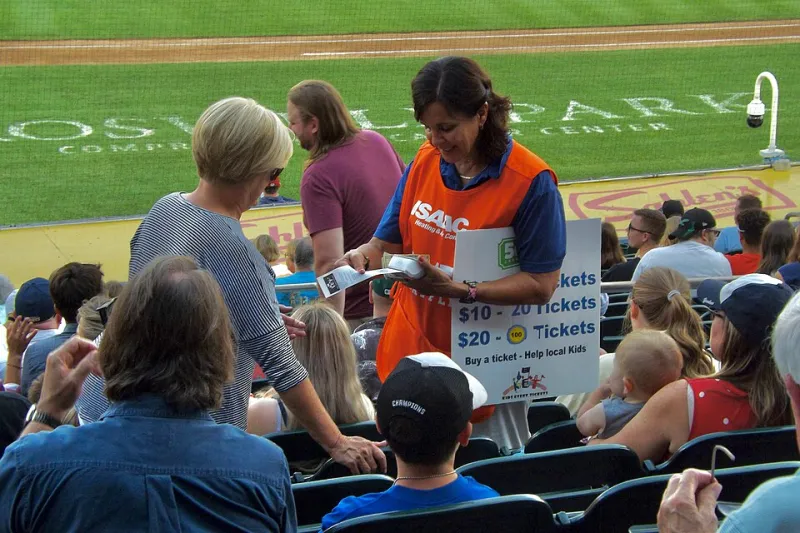
Photo: Andre Carrotflower, CC BY-SA 4.0, via Wikimedia Commons
There is a moment at every grassroots ground, usually around 3.42pm, when the football briefly stops being the main event. A folding table appears near the tea hatch. A plastic tub of tickets lands on it with a satisfying thump. Someone tests a microphone, gets a squeal of feedback, and says 'sorry, sorry' to nobody in particular. The half-time 50/50 draw is open for business.
It is not glamorous. It is not modern. It is, if we are honest, a raffle with a split personality: half the pot goes to one lucky punter, half goes to the club. But in 2026, with floodlight bills behaving like transfer fees and every volunteer wearing three hats before kick-off, that little table might be one of the most important pieces of infrastructure at the ground.
The table, the tub and the tin
At Fenwick Road, home of a step-six side with a proud tea hut and a pitch that slopes like a badly made bed, the draw is run by Denise. She has sold tickets for 19 years. She carries a copper-coloured coin jar because the card reader signal drops out behind the main stand, and because the queue moves faster when people have the right change.
'You get the same faces every week,' she says, snapping a strip of tickets from the roll. 'The bloke who buys two before kick-off and two at half-time. The dad who says 'not this week' and then comes back when he hears the pot is over a hundred. The kids who pool their pocket money and argue about whose name goes on the stub. It's a social club with a football match attached, really.'
The arithmetic is not complicated, which is part of the charm. A single ticket is usually a pound, a strip maybe two. The seller tears, the buyer stuffs the stub in a pocket, and the pot grows. At one ground we visited, the half-time total was £186. The winner took £93. The club took £93. After the cost of the ticket roll — and a packet of custard creams for the table — roughly £70 went towards the running of the club.
Seventy quid. In 2026, that is a set of corner flags, a chunk of a referee fee, or about three weeks of tea bags for the committee. It is not a fortune. It is the difference between a small job getting done and a small job being kicked down the road.
What the pot actually pays for
Ask a club treasurer where the 50/50 money goes and you get a list that sounds deeply unromantic until you realise it is the whole point. Insurance. First-aid kit refills. Pitch hire for the reserves. A new kettle for the changing room. Junior training bibs. Goal nets. The bloke who cuts the grass on a Friday night. The odd away-day minibus fuel top-up.
Asif, treasurer at a club in the North West Counties, reckons their draw brings in around £2,400 across a season. 'It sounds like small change next to a sponsor's cheque,' he says, 'but it is reliable small change. It turns up every home game. It doesn't ask for its logo on the shirt. And when the electricity bill lands in January, you are glad of every tenner.'
That is the unglamorous truth of grassroots football in 2026. The big costs get the headlines — 3G hire, floodlights, travel — but the draw quietly patches the holes in between. It pays for the stuff nobody photographs: the tape, the paint, the loo roll, the replacement mop. It keeps the lights on and the tea flowing, in the most literal sense.
The regulars who never win
Every club has them. The loyal ticket buyers who have supported the draw since before the current manager was born and have won absolutely nothing. At Fenwick Road, that man is Mick. He stands on the far touchline, hands in pockets, and buys a strip every home game.
'I won a meat voucher in a raffle in 2011,' he says, with the weary dignity of a man who has accepted his fate. 'It wasn't the 50/50. It was a separate thing for the Christmas do. I've had nothing since. But I keep buying. It's not about winning, is it? It's about the club getting the other half.'
This is the strange, decent heart of the half-time draw. Most people know they will not win. The odds are not the point. The point is that the club gets your pound either way, and you get the small thrill of checking your stub when the number is read out over a crackling PA system. For a few seconds, everyone in the ground is listening to the same thing. That is rarer than it sounds.
A tongue-in-cheek guide to proper draw etiquette
If you are new to the ritual, here is the unofficial code.
Have your change ready. Do not wait until the seller is halfway through a sentence about the pot to produce a twenty-pound note. The queue has a rhythm. Respect it.
Do not crowd the table at the whistle. The draw is not a Black Friday sale. Form a loose, polite queue. Let the person with the walking stick go first.
Check your pockets before you mutter 'fix'. If the winning number is called and nobody claims, it is almost certainly because the winner is in the loo, buying a pie, or has left the stub in the car. It is not because the committee has rigged a £93 windfall.
If you win, keep it low-key. A small fist pump is acceptable. A knee slide in front of the away fans is not. Remember that the other half of the pot is going to the club you both just watched lose.
If you don't win, clap anyway. The winner is probably a pensioner called Sandra who has been coming since 1978. Let her have her moment.
The social heart of the matchday
The half-time 50/50 draw is not the reason anyone goes to football. It is not the reason the club exists. But it is one of the few moments when the whole ground — home fans, away fans, subs, committee members, dog walkers, and the bloke who has been trying to get the microphone to work since 2.15pm — is doing the same thing at the same time.
In 2026, when so much of grassroots football is about survival, the humble draw is a reminder that the club is not just a team. It is a collection of people who are willing to buy a ticket they know they probably won't win, because the other half of the pot pays for the nets, the tea, the tape and the lights. It is the rattle of a coin jar. It is the squeal of a bad microphone. It is a fiver in the sweets tin.
And at 3.42pm on a Saturday, it is the sound of a club keeping going.