Bench Marks: The Unwritten Code of the Sunday League Sub

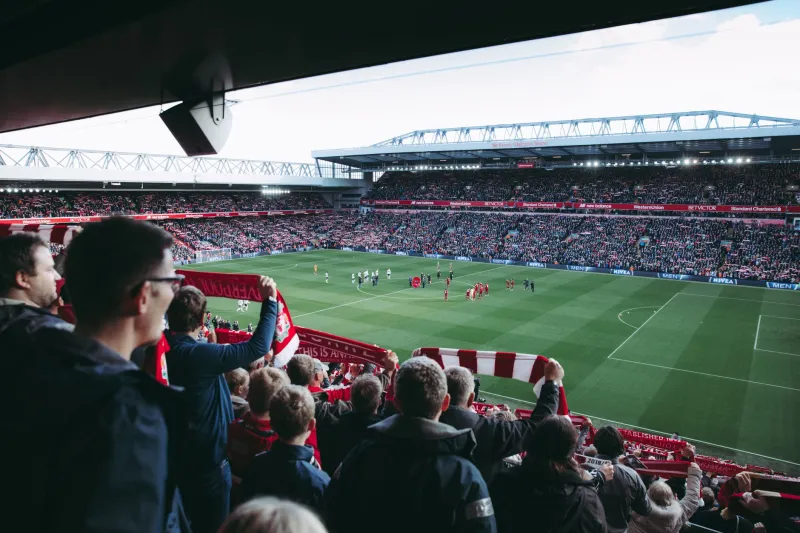
Photo: Mrchikkin, CC BY-SA 4.0, via Wikimedia Commons
At 9.07 on a Sunday morning, the bench is already a crime scene. There is a kagoule over the back rail, a flask doing more for team morale than the captain's pre-match speech, and a bloke in two pairs of socks trying to work out whether the pitch is frozen or just angry. The warm-up is optional. The banter is not. Welcome to the coldest seat in football: the Sunday league substitutes' bench.
It is easy to treat the bench as spare parts. In reality it is a small, shivering society with its own hierarchy, rituals and etiquette. It is where injured strikers become tactical analysts, where the emergency keeper pretends not to be terrified, and where a 38-year-old full-back can spend 70 minutes being furious about a throw-in he was never going to take. At UK Socca, we have spent enough mornings on the rail to know the bench deserves better than a quick wave at full-time.
The 20-Minute Warm-Up That Fools Nobody
The first ritual arrives around the 20th minute. One sub stands, zips the jacket, and begins a jog that is half athletic preparation and half performance art. The high knees are ambitious. The hamstring stretch is suspicious. The manager glances across, nods once, and returns to shouting at a winger who cannot hear him.
Everyone knows the truth. The warm-up is not really about the body. It is about sending a message: I am here. I am ready. I am not sulking about being left out, even though I am absolutely sulking about being left out. The bench reads it like a familiar sitcom. There goes Dave, doing his little lap. There goes the lad who has been managing his calf since August, suddenly mobile because the right-back has taken a knock.
The timing matters. Warm up too early and it looks desperate. Too late and you are scrambling for a bib while the referee is checking his watch. The sweet spot is somewhere between the opposition's second corner and the first signs of frostbite. It fools nobody, but it is essential.
A Hierarchy Held Together By Flask and Fury
Every bench has a pecking order. At one end, the player who was genuinely unlucky to be dropped and knows it. At the other, the lad who brought the flask and has therefore earned a kind of permanent diplomatic immunity. In between: the injured centre-half who is now assistant manager, the winger who is not 100 per cent but has brought three pairs of boots, and the emergency goalkeeper who is praying nobody notices the gloves are his dad's.
The roles are unwritten but rigid. There is the morale officer, usually the loudest person in the club, whose job is to keep a straight face while the team is 3-0 down and the wind is coming sideways off the allotments. There is the tactical translator, who turns the manager's yell of get it in the mixer into something approaching a coherent instruction. There is the linesman baiter, who should know better and usually does. And there is the quiet one, hood up, earbuds in, surviving on a half-time sausage roll and the belief that his moment is coming.
The bench is also the club's memory. It is where the old heads remind everyone that the pitch used to be a swamp, the ref used to be fair, and the opposition used to be decent. It is where the fines pot is discussed with the seriousness of a parliamentary inquiry. It is where you learn that a Sunday league team is not just 11 players. It is 16 blokes and a flask, all pretending the cold is fine.
The Dark Art of Staying Ready
The mental side is the bit nobody trains. A substitute can go 70 minutes without touching the ball and then be asked to change the game with one run, one header, one cynical foul on the halfway line. The best subs do not switch off. They watch the full-back's legs. They note which centre-half hates turning. They clock the keeper's kicking. They are doing the job even when the job looks like sitting still.
One manager we spoke to said he can tell more about a player in 15 minutes off the bench than in 90 minutes of training. You want to see the reaction when they are called, he said. Some lads are up before you have finished the sentence. Some look at you like you have asked them to run a marathon. The good ones are ready. They have been ready since the warm-up that fooled nobody.
Then there is the 75th-minute introduction. It is the most dramatic moment in Sunday league football that nobody films. The manager turns, scans the bench, and points. The sub rips off the bib, does that weird little hop, and runs on with the energy of someone who has spent an hour trying not to think about the cold. The game either changes or it does not. Sometimes the sub scores. Sometimes he shanks a clearance into the car park. Sometimes he simply stands in the right place and lets the centre-forward know he is there. All of it counts.
The Coldest Seat, the Warmest Club
The bench is not a punishment. It is a promise. It says the squad is bigger than the starting XI, that the club runs on more than goals and clean sheets, and that the bloke with the flask matters as much as the bloke with the golden boots. In 2026, with 3G bookings scarce and winter weather doing its worst, that promise is worth more than ever.
So here is to the Sunday league substitute. To the one who warms up at 20 minutes and gets on at 75. To the one who brings two pairs of socks and no complaints. To the one who claps the lads off after a 4-1 defeat, then drives home with the heater on full. You may have the coldest seat in football. You are also part of the warmest thing in the game.