The Meter's Running: What Winter Really Costs the Clubs Keeping the Lights On
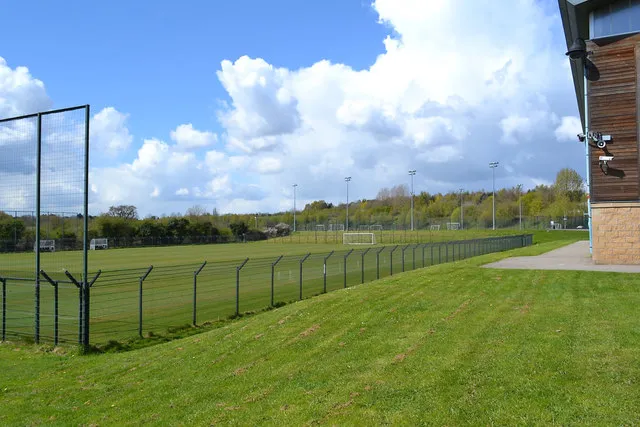
Photo: Robin Stott , CC BY-SA 2.0, via Wikimedia Commons
The clocks went back a week ago, and you'll have felt it. Saturday's 3pm now finishes in that amber half-light where you can't decide whether to put your sunglasses on or take your coat off. By Tuesday, the only football happening anywhere near you is happening under a bulb.
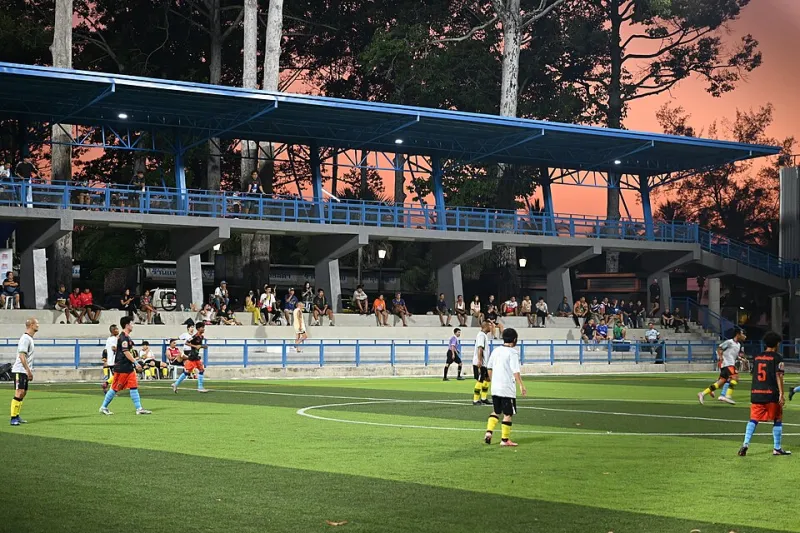
Nobody claps the floodlights. They should. Somewhere in your town this week, a bloke in a hi-vis is standing in a plant room listening to switchgear hum while a treasurer refreshes an energy portal on their phone and mutters a number out loud. The lights come on. The game happens. That's the deal — and every winter, that deal gets a bit more expensive to keep.
Forty minutes of football, an hour of hire
Start with the obvious cost, the one every parent with a child in winter training knows in their bones. An hour on a full-size all-weather pitch, floodlit, in the evening, rarely comes in under fifty quid and can easily nudge eighty or ninety depending where in the country you are. Book four hours a week for the seniors and two for the junior age groups and you're staring at a four-figure monthly outlay before a single ball has been pumped up.
Small-sided cages are cheaper, but you need more of them, and the maths lands in the same postcode. Add the changing rooms, the hot water for twelve lads who all want a shower at once, and the tumble dryer that's been eating football socks since the last government, and the honest answer to "what does winter cost?" is: more than the summer does. Considerably more.
There's a reason the pitch operator charges what they charge, of course. They're the ones paying for the light.
The meter, the meter, the meter
If your club is one of the lucky — or unlucky — ones with its own floodlights, the winter bill isn't a hire fee, it's a meter reading. Old halogen rigs drink power. A full set across two pitches can chew through a serious number of kilowatt hours in a week, and standing charges don't care that you only use the site three nights out of seven.
Plenty of clubs have made the switch to LED in the last few years, often with the help of a grant and a lot of form-filling, and the difference is genuinely startling — same light, a fraction of the draw, and fewer of those lovely evenings where half the rig trips out and a match finishes in a sort of romantic gloom. But the kit isn't free, the installers aren't free, and the clubs that most need the saving are usually the ones furthest back in the queue.
Meanwhile the treasurer is doing the least glamorous job in football: reconciling a bank account that took £340 at the tea hut, paid out £610 in pitch hire, and needs to find another £90 before Friday because the under-12s have an away fixture in the next county.
The raffle economy
And this is where grassroots football reveals its true genius. Because the gap between the bill and the income is almost never closed by a business plan. It's closed by Denise with a clipboard.
The meat raffle. The bonus ball. The 50/50 at half-time. The quiz night in the back room of a pub that has kindly donated a voucher for a carvery. The sponsor's board in the clubhouse with thirty local firms on it, half of whom are run by people whose kids played for the club a decade ago. The Christmas draw. The summer fete. The bloke who fixes the boiler for free because his nephew is the left-back.
It's easy to be a bit sniffy about raffles. Don't be. That folded-up fiver in a plastic tub is floodlight hours. It's the difference between the under-14s training twice a week and once a week, and once-a-week training for a kid in November is basically just standing about in the cold getting worse at football.
The sharp bit
Here's the part that makes the warmth curdle slightly.
Every one of those costs eventually lands on a family. Winter training fees. A fiver a session for the small-sided league. New astros because the old ones have gone through at the toe. Match subs. Fuel to a fixture ninety minutes away because the league's geography is basically a cry for help.
For a household with two kids in the same club, that's a real chunk of a month. And the brutal irony is that the players a club most wants to keep — the ones who turn up in the rain, who are first to training and last to leave, whose parents are quietly skint — are exactly the ones most likely to drift away when the January invoice lands.
Some clubs get this and quietly do something about it. A hardship fund nobody talks about. A boot bank in the corridor. A WhatsApp message to a parent that says, cheerfully and without ceremony, don't worry about this month. Others haven't got the headroom, because the pitch hire went up again and the council has reclassified the changing rooms.
Why we still flick the switch
And yet. Drive past any of these places on a Tuesday in February and you'll see it: the glow over the treeline, the steam off twenty kids, the parents in coats doing that stamping thing by the rail, the tea hut doing a brisk trade in something with a lid on it.
That's not an accident. That's a hundred small decisions by people who will never be on a highlights reel — the secretary chasing the energy contract, the groundsman who knows which corner floods first, the volunteer who stands in the cold selling squares on a grid.
So here's the ask, and it's a small one. Buy the raffle ticket. Sponsor a floodlight hour if your business can. Offer to do the grant form, because the person currently doing it is sixty-eight and doing it on a kitchen table. And next time you're stood under those lights on a freezing Tuesday, give them a nod. They cost more than you'd think, and they're worth every penny.