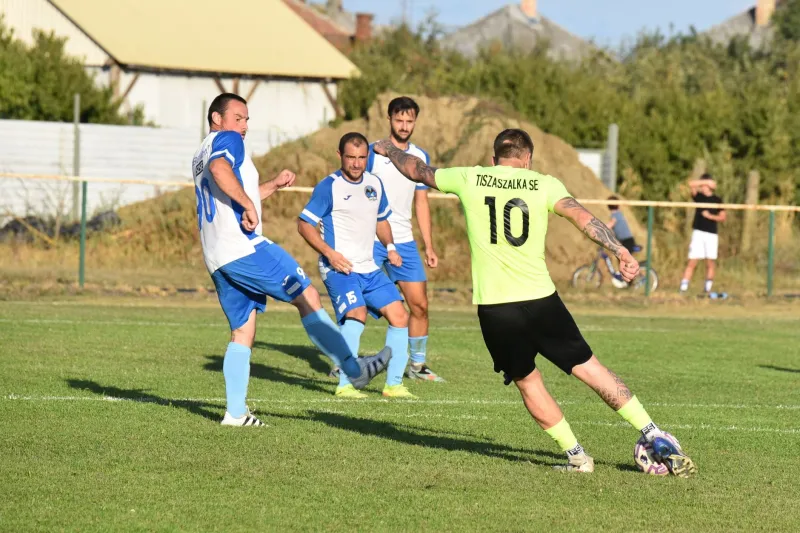
The 9am Mud Check: Who Really Decides If Your Sunday Game Goes Ahead?

Photo: PattayaPatrol, CC BY-SA 4.0, via Wikimedia Commons
At 7.43am on a grey November Saturday in 2026, the first message lands in the club WhatsApp group: pitch inspection at 9am. Nobody replies immediately. Everyone knows what it means. Somewhere between hope and reality, a volunteer is about to walk across a football pitch and decide whether the weekend happens.
This is the ritual that grips grassroots football at this point in the season. The clocks have gone back, the rain has settled in, and every home club in the country is watching the forecast like it is a league table. By 10am, some games will be on. Others will be off. The difference often comes down to one person with a fork, a pair of boots and a torch on their phone.
The first look: 7.45am
The groundsman arrives before anyone else. He knows the bad corners. He knows the goalmouth that holds water like a paddling pool. He knows the patch near the dugout where the drainage has been threatening to give up since the summer. A pitch can look fine from the car park and be a swamp at the far end, and the far end is usually where the linesman has to run.
He walks the surface slowly. He presses a boot into the turf. He checks the centre circle, the penalty spots, the lines. He looks for standing water, worm casts, divots, and that horrible squelch that tells you the ball will stop dead after three passes. Then he sends a photo to the club secretary with a caption that says everything and nothing: not great.
What the referee is actually checking
The referee has the final say on whether the field of play is safe, but the decision is rarely made alone. Home clubs are expected to inspect and report. Leagues have their own rules about when inspections should happen and who needs to be told. Referees arrive early, walk the pitch, and ask the questions that matter: Is there standing water? Is the surface unsafe? Are the goalposts secure? Can players turn without sinking?
It is not about whether the pitch is muddy. Muddy is normal in November. It is about whether the pitch is playable and safe. A heavy surface can be fine if the ball still rolls and the studs stay in the ground. A pitch with a six-yard box full of water is not. Neither is a frozen surface that has not thawed by kick-off, or a corner flag area that has become a trench.
Referees do not enjoy calling games off. They know what it costs: the fixture backlog, the lost pitch hire, the parents who have already driven across town, the tea hut volunteer who has stocked up on bacon. But they also know what happens when a game goes ahead on a surface that should have been left alone. Twisted ankles. Sore backs. Arguments that last longer than the match.
The volunteer WhatsApp chain
By 8.15am, the group chat is moving. The home club secretary is checking with the groundsman. The fixture secretary is checking the league’s rules. The opposition manager is asking for an update before his team leaves. The referee is confirming travel plans. Someone has posted a weather radar screenshot. Someone else has posted a GIF of a duck.
The call-off is not a lie-in. It is a small administrative storm. The league needs to know. The referees’ appointment secretary needs to know. The opposition needs to know before they set off. The players need to know before they start warming up in the car park. If the game is off, someone has to rearrange the fixture, and that means finding a new date in a calendar that is already groaning.
There is also the money. Pitch hire may be lost. The tea hut may have ordered stock. The referee may still be entitled to a fee depending on the league’s rules. None of this is glamorous, and none of it appears in the match report. It is the invisible work that keeps community football alive.
The pressures
Everyone wants the game on. The team on a good run wants to keep playing. The team on a bad run wants the chance to put it right. The manager with a full squad wants the points. The manager with four players injured and one stuck at work wants a week off. The league wants fixtures fulfilled. The council wants its pitch preserved. The referee wants a safe surface. The volunteer wants to go back to bed.
And then there is the abuse. Volunteers and referees get it every winter: accusations of favouritism, laziness, cowardice, or some imagined conspiracy. A call-off is treated as a personal insult by people who have never walked a pitch at 8am. It is one of the least fair parts of grassroots football, and it is one of the reasons volunteers walk away.
When the call is right
Sometimes the game is off and it is obvious. The pitch is a lake. The goalmouth is a bog. The wind is trying to remove the corner flags. Other times it is marginal, and the referee has to make a judgement call that will please nobody. Those are the hardest mornings.
When a game does go ahead, it is often because someone has spent hours forking the surface, moving water, sanding the goalmouth, or marking out a pitch that looked hopeless the night before. The players warm up. The tea hut opens. The referee blows the whistle. Nobody thanks the person who made it possible, because nobody sees them.
The unsung people
So here is to the groundskeepers who know every dip in the surface. To the club volunteers who answer the same question forty times before 10am. To the referees who make the call and take the grief. To the fixture secretaries who rebuild the season one postponement at a time.
They are the reason grassroots football survives another muddy November. If your game is on this weekend, thank the person with the fork. If it is off, thank them anyway. They have probably had a worse morning than you.