Floodlights at Nine, Frost on the Breath: Inside the 2026 Winter 3G Pitch Rush
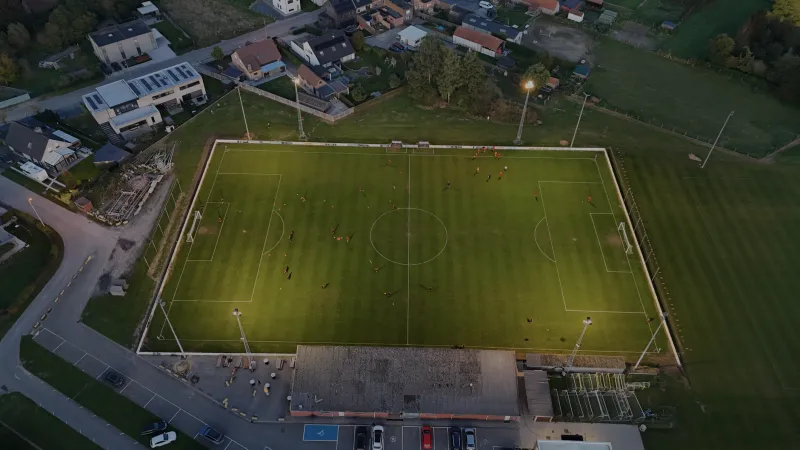
It is 8.47pm on a Tuesday in November, and the car park of a council leisure centre somewhere in the Midlands is doing a passable impression of a motorway services at half-term. Engines idling, headlights on, a bloke in a hoodie eating chips out of a paper tray. Inside the cage, an under-16s side is finishing up. Outside, a Sunday league team is waiting for the 9pm slot — the one that used to be for the lads who fancied a midweek run-out, not the only football they could get all week.
The rubber crumb is cold. The floodlights are on. And somewhere in a spreadsheet, a pitch manager is trying to fit 38 teams into one rectangle.
This is grassroots football in the winter of 2026: less mud, more queuing. And a booking war that nobody really wins.
The grass is gone, the queue is forming
You know the email. It lands on a Friday afternoon, usually just as you're leaving work: “Unfortunately, due to the recent weather, all grass pitches at [insert name] are closed this weekend.” No alternative. No apology. Just a red dot on a map that used to be your Sunday morning.
With grass out of action from November to March — and sometimes longer — the 3G becomes the only game in town. Councils close their fields to protect them. Private operators rub their hands. And every club, from the under-7s to the veterans' third string, suddenly wants the same floodlit surface.
“We used to have a rota,” says one club secretary, who has been running a Sunday side in the north-west for 14 years. “Now it's a scramble. You refresh the booking page at midnight and hope. If you miss out, you're ringing round every school and leisure centre within 20 miles, begging for a cage at 9pm on a Wednesday.”
He laughs, but it's the laugh of a man who has spent three hours on the phone trying to find a pitch for a cup tie.
The maths of a floodlit hour
Ask any club treasurer and they'll tell you: the 3G boom has a price tag. A few years ago, an hour on a decent all-weather surface might have set you back £60 or £70. In 2026, in many towns and cities, it's north of £120 — and that's before VAT, before floodlight charges, before the operator's “peak-time premium” kicks in. Some private sites are charging £180 an hour for a slot that starts after 8pm.
“We've absorbed it for as long as we can,” says one council pitch manager in the south-east. “But the cost of maintaining a 3G pitch has gone up. The rubber crumb, the machinery, the staff. We're not making a profit. We're just trying to keep the lights on.”
That cost gets passed down. Subs go up. Match fees go up. The bloke who used to chuck a fiver in the kitty now finds himself paying £8 or £9 just to get a game. For a lot of Sunday league players — especially the ones with kids, mortgages and a 6am alarm — that's the moment they start thinking about packing it in.
Refresh, ring, repeat: the booking chaos
If you want to understand the modern grassroots secretary, watch them at 11.59pm on a Sunday. They've got three tabs open: the council booking portal, the private 3G operator's app, and a WhatsApp group called “Pitch Wars”. They've set an alarm. They've got their card details saved. They're ready to pounce.
But the system is creaking. Slots vanish before they appear. Block bookings get hoovered up by bigger clubs with youth sections and “partner” status. Phantom bookings — where a team reserves a pitch and then cancels 24 hours before — leave gaps that nobody else can fill. And the poor pitch manager is stuck in the middle, fielding calls from angry secretaries while trying to keep the surface playable.
“We've got 3G pitches, but we've also got schools, universities, Powerleague sites and private academies all competing for the same players,” says one operator in the north-east. “Demand has outstripped supply. It's not about being greedy. It's about physics. You can only fit so many teams on one pitch.”
And when the weather turns — as it always does — the physics gets worse. Grass pitches close. Fixtures pile up. The 3G becomes a bottleneck, and the Sunday league sides are often the ones squeezed out.
Who wins when the weather turns?
The operators, mostly. And the clubs with the biggest budgets, the best contacts and the loudest voices. Youth teams tend to get priority — which is fair enough, in many ways, because kids' football needs the surface more than anyone. But it means the open-age Sunday sides, the ones that have been running for 30 years, are increasingly pushed into the 9pm or 10pm slots.
“The 9pm kick-off is a young man's game,” says one veteran player, now in his late thirties. “By the time you've warmed up, you're already thinking about your bed. And the pub's shut by the time you've had a shower. It's not the same.”
That's the cultural cost. Sunday league football is built on mornings: the early alarm, the bacon butty, the pint after. A 9pm Tuesday kick-off is a different sport entirely — one that works for students and shift workers, but leaves a lot of people behind.
What it means for Sunday morning
None of this is to say the 3G is a bad thing. It keeps games on when the grass is under water. It gives kids somewhere to play. It keeps clubs alive. But the winter booking war is exposing something uncomfortable: grassroots football is being forced to compete for space in a market that wasn't designed for it.
Some clubs are finding workarounds. Shared bookings. School cages. Council-owned 4G pitches. A few are even talking about forming consortiums to negotiate block rates. But most are just absorbing the cost, hiking the subs, and hoping the next generation doesn't decide it's too much hassle.
Back in the car park, the 9pm lads are getting changed. It's 10.58pm, and they've lost 3-2. Someone's eating a cold pasty. Someone else is complaining about the £10 they had to pay upfront. But they're still there, still laughing, still planning next week.
“Same time next week?” one of them asks.
“If we can get a slot,” comes the reply.
And that, in 2026, is the real state of grassroots football. Not mud. Not rain. Not even the price of a pint. Just the endless, exhausting, floodlit scramble for a patch of plastic — and the hope that someone, somewhere, finally builds another one.